
Girls and young people shaping the futures they deserve.
Young people should not simply live with the future. They should have the power to shape it.
The Pink Box Initiative works alongside girls, young women and young people to build the knowledge, confidence, opportunities and collective power they need to thrive.
Our Story →Our Vision
A just, inclusive and resilient society where girls, young women and young people are empowered to realise their rights, shape their futures and lead change.
Our Mission
To advance gender justice, wellbeing, opportunity and resilience through feminist, youth-led and community-centred action.
Three connected areas. One bigger goal.
Gender, Health & Wellbeing
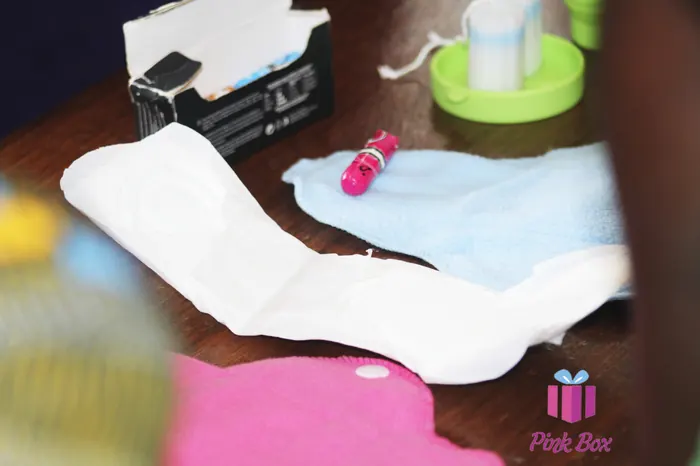
We support girls and young women to understand their rights, make informed decisions about their bodies and wellbeing, build healthy relationships and access appropriate support.
Education, Digital Futures & Economic Agency
We help young people build the skills, confidence and opportunities to navigate education, technology, work and leadership.
Climate, Environment & Community Resilience
We support young people and communities to understand environmental challenges, strengthen resilience and create practical pathways towards sustainable futures.
From ideas to action.
Four programmes carry this work forward, each with its own name and rhythm.
Her Future
Healthy • Safe • Empowered • Heard
A programme supporting girls and young women to strengthen their health, safety, wellbeing, economic agency and voice. Her Body. Her Safety. Her Wellbeing. Her Future. Her Voice.
Digital Futures Lab
Learn • Protect • Think • Create • Work • Lead
Helping young people navigate education, technology, artificial intelligence and the changing world of work safely and confidently.
Young Women Lead
Agency • Economic Power • Leadership • Collective Action
Creating pathways for young women to strengthen their economic agency, leadership, networks and collective power.
Youth for Resilient Communities
Know • Prepare • Restore • Create • Lead
Supporting young people to understand climate and environmental challenges, strengthen community resilience and create practical solutions.
Change should be visible.
We measure what changes — not just how many people we reach.
Numbers tell part of the story — people tell the rest.
We work differently.
Our work is grounded in the belief that lasting change happens when people have the knowledge, resources, opportunities and power to shape decisions affecting their lives.
Feminist
We challenge unequal power relations and work towards gender justice, bodily autonomy, equality and dignity.
Youth-led
Young people are not simply beneficiaries. They help shape, lead and evaluate our work.
Community-centred
We work with communities, recognising local knowledge and leadership.
Rights-based
We approach health, education, safety, participation and opportunity as rights.
Intersectional
We recognise that gender inequality intersects with poverty, disability, geography, age, digital exclusion and other forms of inequality.
Evidence-driven
We listen, measure, learn and adapt.
Movement-connected
We collaborate, share learning, refer to specialists and contribute to wider feminist and youth movements.
Care-centred
We believe meaningful work should not require people to sacrifice their wellbeing.
It started with a box.
Before The Pink Box Initiative had a name, a strategy or a vision for the future, there was a girl, a problem, and a decision to do something about it.
In 2017, during my final year of high school in Dar es Salaam, I witnessed a moment that stayed with me.
A young girl at our school was crying and running towards the Matron's office after boys in her class had laughed at her for soiling her clothes with menstrual blood.
I remember thinking: how many other girls are going through this?
I went to have a candid conversation with our school Matrons. I wanted to understand whether what I had witnessed was an isolated incident or part of a bigger problem. They confirmed that it was, indeed, a challenge.
Girls regularly came to the Matron's office looking for sanitary pads. Month after month, the Matrons saw girls who needed menstrual products but did not have them. The few pads available through donations could make a difference, but the need was recurring.
That conversation changed something for me. I realised that if we wanted things to be different, we could not simply wait for someone else to solve the problem.
So I gathered five other girls. There were six of us. We had no organisation, no funding and no elaborate plan. We simply had a shared concern and a question: what can we do with what we have?
That was how The Pink Box began.
Our first collection box was not something we bought. We collected discarded cardboard boxes, joined them together and taped them into one large box. Then we found a discarded mosquito net. It happened to be pink, so we wrapped the box in it.
That became our Pink Box.
The six of us carried it from classroom to classroom, asking our fellow students to contribute sanitary pads whenever they could. We collected them door to door, class by class, and encouraged more girls to become part of the effort.
Every contribution mattered. One packet. A few pads. Whatever someone could give.
We gathered the pads, packed them into bundles and handed them to the school Matron, creating a simple pathway for girls to access support when they needed it. The girls knew where to go. The Matron had something to give them. And slowly, we began to see the difference.

Alice and her schoolmates with the very first Pink Box, Loyola High School, Dar es Salaam.
Girls continued visiting the Matron's office month after month to access the pads we had collected through our classroom campaign. What had started as a collection box was becoming a small, student-led support system within our school.
For a girl who had unexpectedly started her period, for a girl who had no money to buy pads, or for a girl who simply needed help, those bundles could mean the difference between spending the day in embarrassment and being able to carry on with school.
What began with six girls did not remain with six girls. As the initiative grew, boys began to participate too. They contributed money to help us purchase sanitary pads.
This was an important moment for us. The issue was no longer being treated as something girls had to solve alone. Our wider school community was beginning to recognise that creating a supportive environment for girls was something we could all contribute to.
We had started with girls organising around a problem that directly affected them. Then others joined. And we learned one of our earliest lessons about collective action: when people are given the opportunity to contribute to a solution, a small idea can become something much bigger than the people who started it.
The more we saw, the more we understood that menstrual products were only one part of a much bigger picture.
The girl who ran to the Matron's office had not only experienced a lack of sanitary pads. She had experienced embarrassment, stigma and humiliation.
It made us ask bigger questions. Why should menstruation become a reason for a girl to feel ashamed? Why should access to something as basic as a sanitary pad affect a girl's dignity and ability to participate fully in school? Who gets access to resources? Who gets heard? Who gets to feel safe? Who gets to stay in school? Who gets to make decisions about their own lives? And who gets the opportunity to imagine a future, and actually pursue it?
Those questions have stayed with us. They are part of why The Pink Box Initiative has grown beyond its beginnings in menstrual health.
Today, we work with girls, young women and young people in Tanzania to advance gender justice, wellbeing, opportunity and resilience. Our work has expanded because we have learned that the challenges young people face are deeply connected.
Health is connected to education. Safety is connected to agency. Digital knowledge is connected to opportunity. Economic opportunity is connected to power. And the health of our environment is connected to the futures our young people will inherit.
I could not have known in 2017 exactly what The Pink Box would become. I was simply a student who saw a girl hurting and decided to ask a question.
I spoke to the Matrons. I brought together five other girls. And we started.
But I did not build this alone. The girls who contributed pads made it possible. The boys who contributed money became part of it. The Matrons who received and distributed the pads gave the initiative a pathway to reach the girls who needed support. Our school community gave the idea room to grow.
That is why our origin story has never been about one person having all the answers. It is about what can happen when someone notices a problem, chooses to act, and creates space for others to join.
That is still how we understand leadership. We believe people closest to a problem should have power in shaping its solution. We believe young people should not simply be recipients of decisions made about their lives. They should be able to participate, question, create, organise, lead and shape the future they will inherit.
The founder's first act was not to build an organisation. It was to bring people together around a problem they could see. That remains at the heart of who we are.
We have grown beyond the original box. But we have not grown away from what it taught us.
The box reminds us that innovation does not always arrive looking impressive. It reminds us that community solutions can begin with very little. It reminds us that small contributions can become something much bigger when people act together. It reminds us that institutions and communities can create pathways of support. And it reminds us that young people are not empty vessels waiting for adults to bring them solutions.
We already have ideas. We already have knowledge. We already have courage. We already have the ability to lead.
Currently, we are building an organisation that can grow without losing the values that started it — one that works with communities, not around them; that treats young people as co-creators, not beneficiaries; that measures what changes, not only who we reach; that collaborates with movements rather than trying to stand apart from them; and that understands that care, rest and wellbeing are part of sustaining feminist work.
Because the story of The Pink Box was never really about a box. It was about what happened when young people saw a problem, believed they could do something about it, and chose to act together.
The box was small. The idea was not.
What started in 2017 with one girl asking questions, five girls joining her, discarded cardboard boxes, a discarded pink mosquito net and a school community willing to participate has grown into a much bigger belief: when young people have the space, resources, opportunities and collective power to act, we can shape change.
And we are still building.
After finishing high school, Alice went on to the African Leadership University's Kigali campus, where she met Oluwafunmibi Asunmonu, Vanessa Irakoze, and Aude Isimbi. Together, the four of them carried the idea forward — continuing Pink Box programming across Kigali, Rubavu, and Musanze in Rwanda, while staying closely connected to the founding team's ongoing work in Tanzania, which has since reached Iringa, Dar es Salaam, Pwani, Mwanza, Karatu District, and the Arusha region.

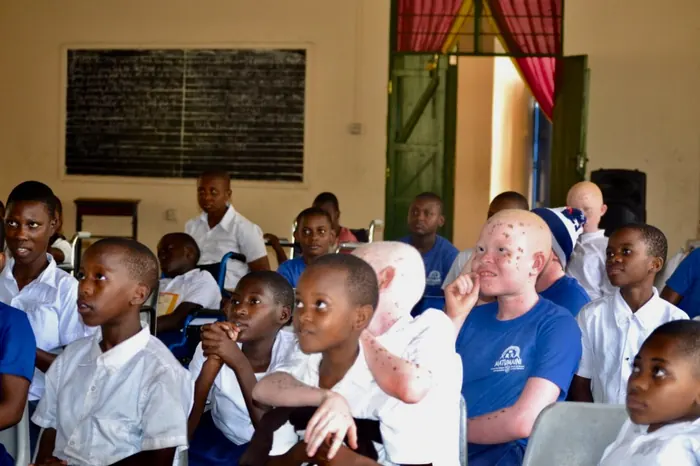
The program's reach grew to include students with disabilities, in partnership with organisations like Queen's Commonwealth Trust.
The 2017 origin story was later featured by the International Planned Parenthood Federation, June 2017.
Where we work
Rooted in Tanzania, with programming that has grown into cross-border partnerships in Rwanda.
Mwanza
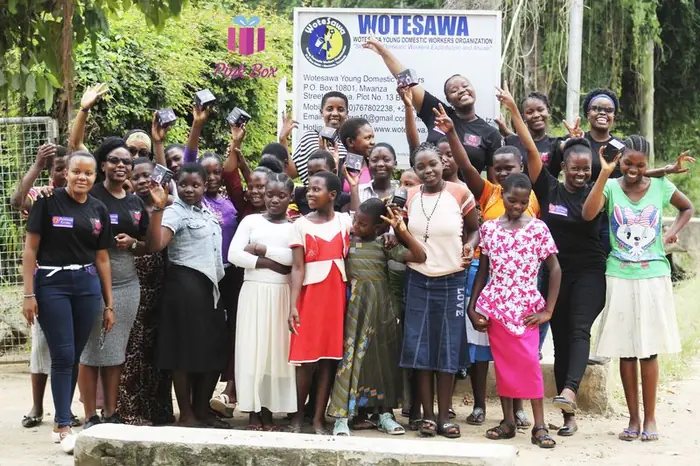
School outreach, health workshops, and community programming based in and around Mwanza — including work alongside the Wotesawa Young Domestic Workers Organization.
Musanze & Rubavu
Partnership programming extending the health and education model across the border.
Kigali
Convenings, leadership training, and collaboration with regional women's rights networks.
The people behind the numbers.
Change is more than a statistic. Read the stories, ideas and knowledge behind the work.
Change needs people.
Partner With Us
Collaborate with us on programmes, research, advocacy or community action.
Get in touchSupport Our Work
Support young people-led change. Give whichever way works best for you.
Mobile Money
Paybill / till number — details coming soon.
Bank Transfer
Account name, number & bank — details coming soon.
Share an Opportunity
Jobs, fellowships, grants and other opportunities for young people.
Get in touchPartners
Organisations we've worked alongside to deliver programmes across Tanzania and Rwanda.


The future is being shaped now. Let's shape it together.
Let's build what comes next.
Whether you are a young person, community, organisation, funder, researcher or potential partner, we'd love to hear from you.